

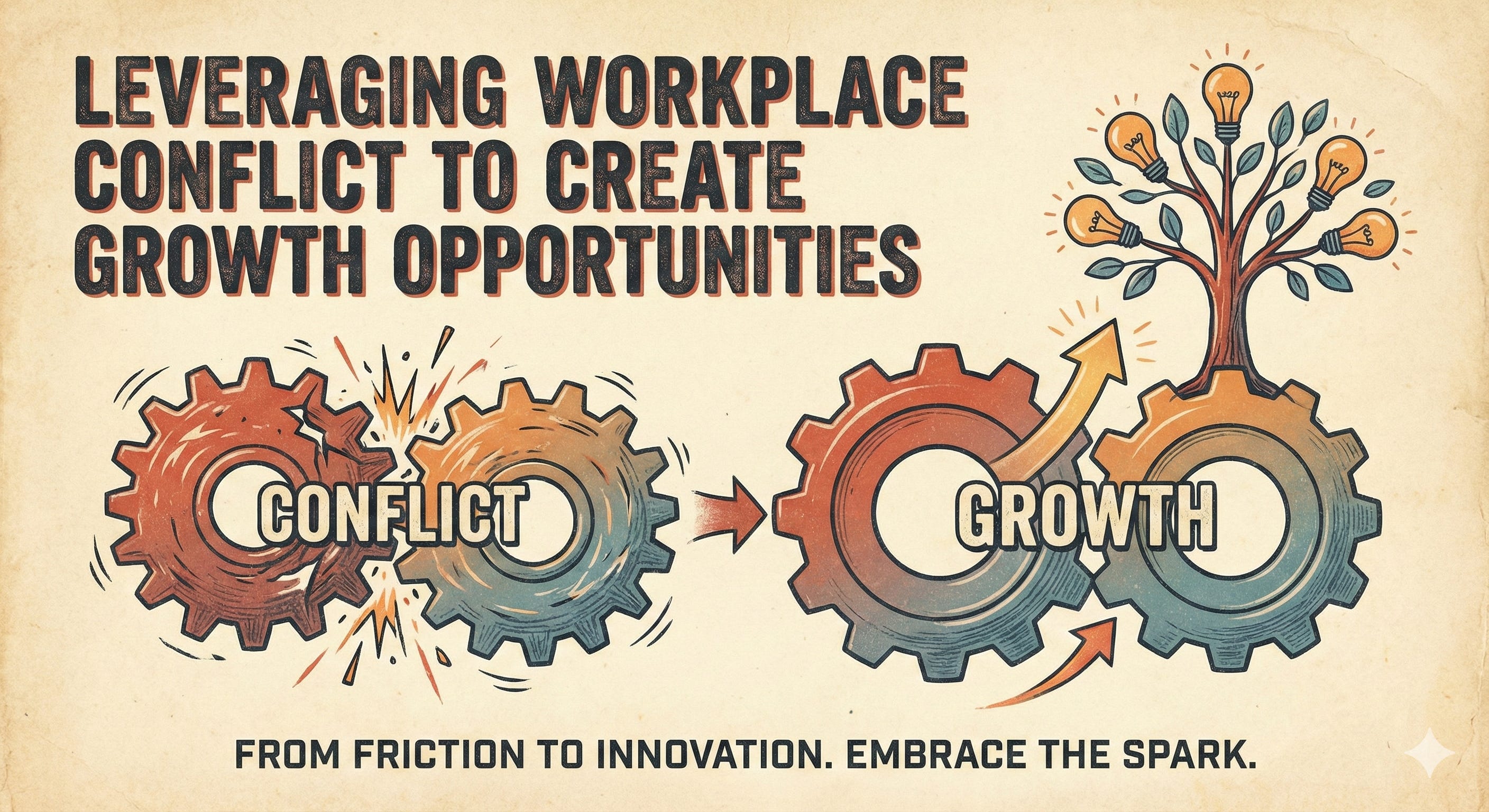
Effective workplace collaboration brings team members’ individual talents and diverse perspectives together. Focused on a mutual goal, they brainstorm ideas that can spark creative innovations. This true synergy can serve as a foundation for future breakthroughs.
However, the collaborative process isn’t always smooth sailing. Team members sometimes engage in heated disagreements that threaten to derail progress on a common goal. Many people view these confrontations as distracting and counterproductive. In my view, however, they can help an organization more effectively achieve key objectives.
Desirable Healthy Workplace Conflict
Some types of workplace conflict are quite healthy. For example, holding regular debates on preset topics encourages a free flow of ideas. Participants engage in lively discussion (and even disagreement) backed up by proven facts. When team members consistently flex their intellectual muscles, they become better equipped for big-picture thinking and creative problem-solving.
Fostering improved team collaboration is a true win-win. For example, if a large group is tasked with solving a complex problem, dividing the group into smaller teams and incentivizing each to be the first to produce a solution benefits everyone:
The company moves forward on its goals.
The winning team improves its problem-solving skills and applies its aggregate knowledge to future challenges.
Conflicts create opportunities to realign the team and incorporate valuable ideas. Leaders who embrace this help team members feel heard and more committed to the organization’s mission.
How Teams and Companies Benefit from Conflict
Companies that embrace conflict can realize multiple benefits. Encouraging team members to bring any topic to the table—especially those that spark strong opinions—can lead to meaningful progress.
Heightened Creative Mindset
Heated conflict often sparks creativity. When opposing parties take time to understand each other’s perspectives, they gain clarity on an optimal path forward. Creativity thrives in environments built on mutual respect, where team members feel comfortable sharing unconventional ideas.
Improved Problem-Solving Skills
Complex problems often lack obvious solutions. Constructive conflict enables team members to view disagreements as problem-solving opportunities. When unconventional ideas are welcomed, teams are more likely to uncover viable solutions.
Enhanced Leadership Capabilities
Productive workplace conflict can sharpen leadership skills. Employees who develop conflict management abilities also build emotional intelligence and demonstrate commitment to the organization. Such growth often signals leadership potential.
Navigating Through Workplace Conflicts
Disagreements are inevitable among team members dedicated to company growth. Showing respect and honesty—even during heated discussions—keeps the focus on resolving the core issues.
A useful mindset: “Don’t turn away from conflict. Use it to build the relationship, as long as there’s respect and a shared goal. The aim isn’t to win an argument—it’s to get to the right answer.”
A practical technique involves slowing down discussions and writing out each side’s points. This often reveals that both parties are closer in viewpoint than they initially realized.
Avoiding Conflict Isn’t the Answer
Many people feel uncomfortable with conflict and resort to avoidance tactics such as excessive meetings, presentations, and email threads. Although these activities may appear productive, they often waste time and delay important decisions.
Productive conflict—grounded in shared goals and objective evaluation—moves projects forward. Once common ground is found, teams can finalize solutions and develop actionable plans.